
Opens compacted soil
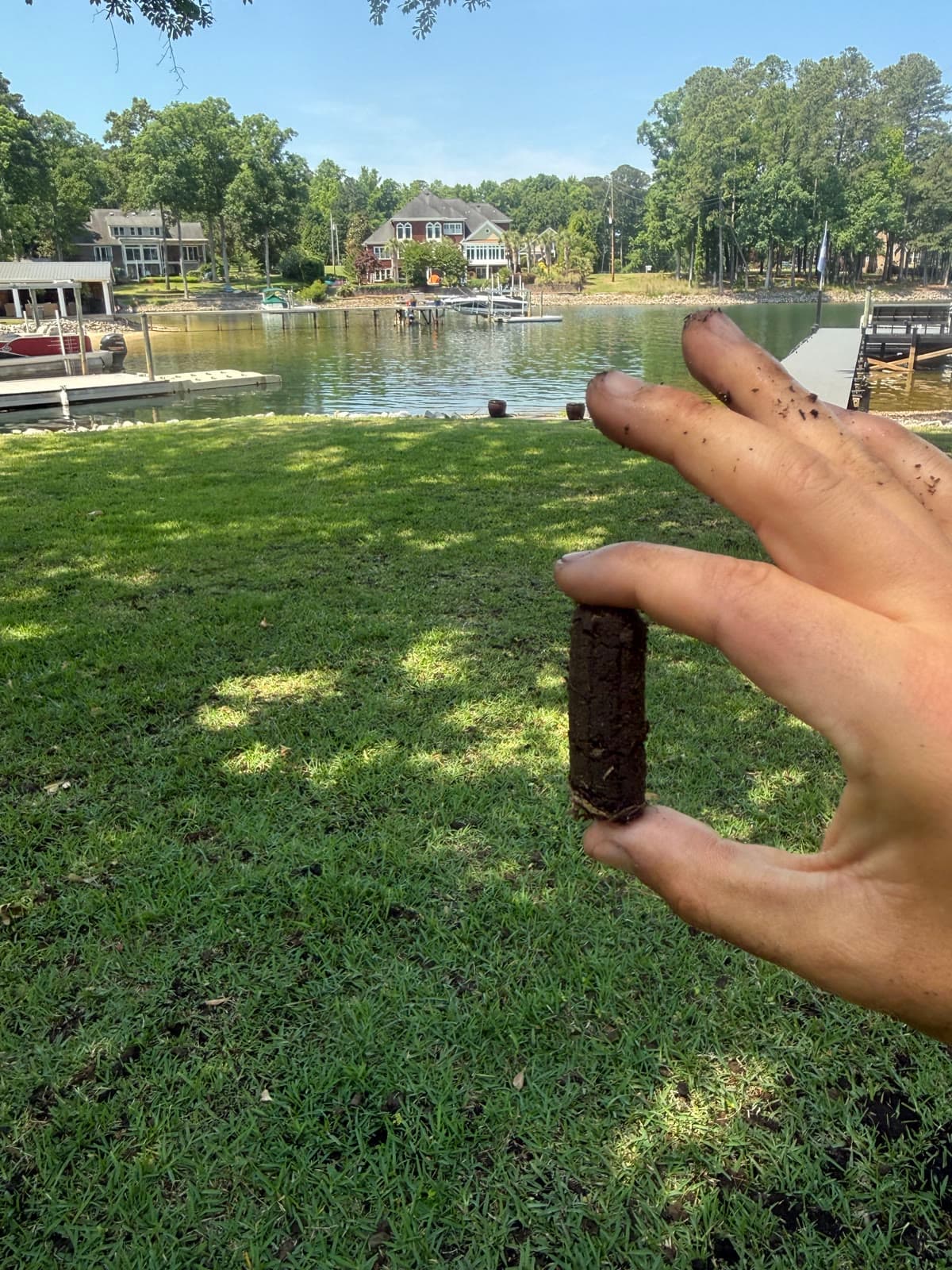
Removing cores creates space in a dense root zone.
Separately quoted add-on
Core aeration removes plugs from compacted soil so air and water can move into the root zone. GLS Turf recommends it when the property shows signs of compaction.
Aerate warm-season turf during active growth
The lawn has to fill the holes back in, and warm-season turf only does that while it is growing hard. For Bermuda, Zoysia, Centipede, and St. Augustine that puts the window in late spring through summer. Soil should be moist, not saturated.
Removing cores creates space in a dense root zone.
The openings can improve water movement on compacted properties.
Actively growing warm-season turf can fill the openings left by the cores.
How we work
Dense soil and poor water movement can indicate that aeration may help.
The soil should be moist enough to pull a core but dry enough to avoid rutting.
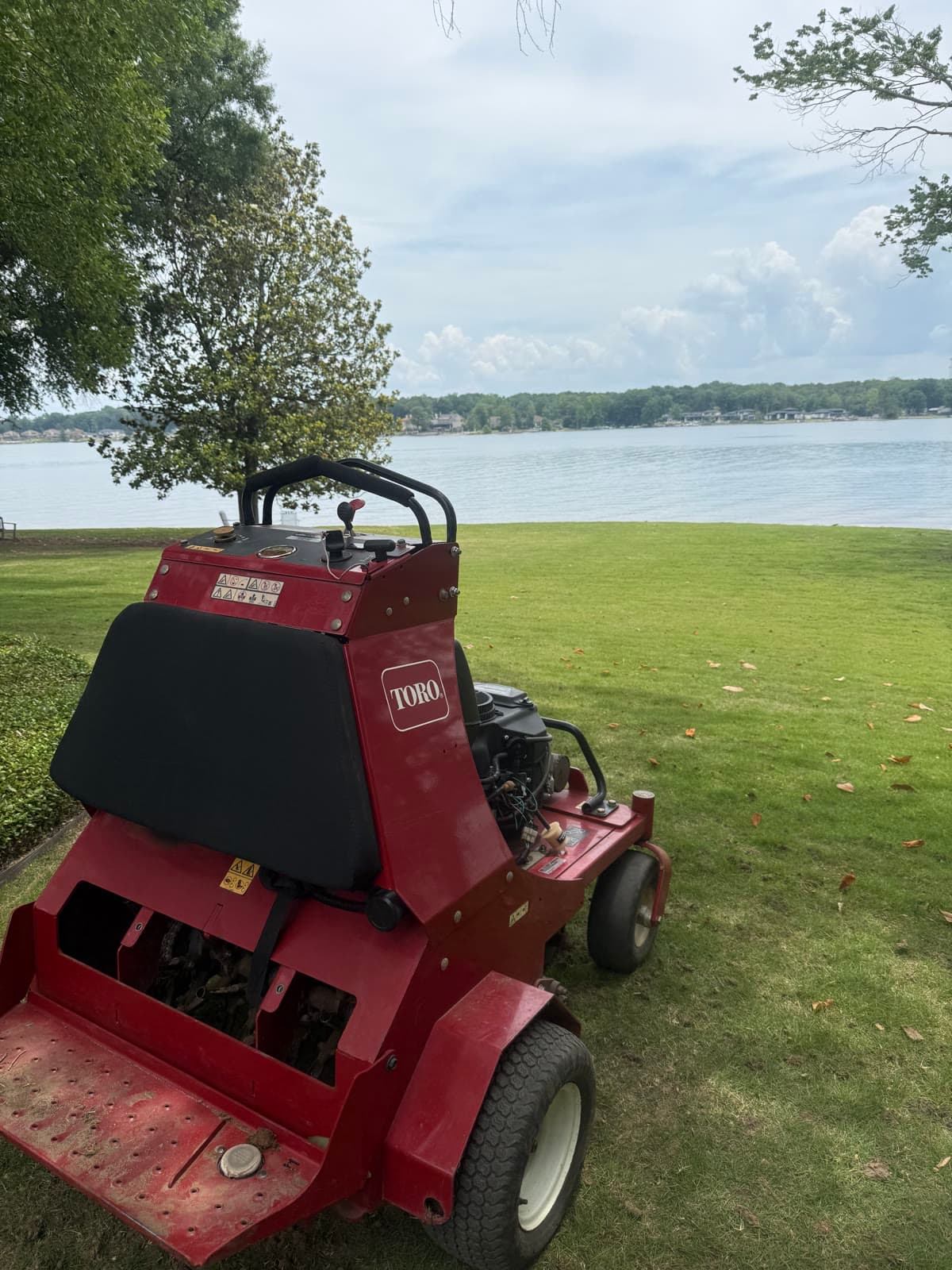
A core aerator removes plugs and leaves them on the surface to break down.
| The question | Common mistake | GLS Turf process |
|---|---|---|
| Deciding the lawn needs it | Common mistakeAeration is scheduled every year whether the soil is compacted or not. | GLS Turf processWe check for compaction before recommending it. |
| Soil conditions on the day | Common mistakeThe machine runs through saturated or hard, dry soil. | GLS Turf processAeration waits for soil that is moist enough to pull a core. |
| Time of year for warm-season turf | Common mistakeCool-season timing is used on warm-season turf. | GLS Turf processWarm-season turf is aerated while it is growing in late spring or summer. |
Questions
Related turf services
Tell us what you are seeing and where the property is. GLS Turf can confirm availability and whether this add-on fits the turf plan.