
Shade decides it first
Bermuda needs full sun. Under the mature trees on a lot of Midlands lots, it stays thin however well it is fed.
Grass guide · Bermuda
Bermuda grass needs full sun, mowing at 1 to 2 inches, and three feedings of ½ to 1 pound of nitrogen per 1,000 square feet: early May after it greens up, June or July, and one last time in late summer. From September through April it gets no nitrogen at all.
Clemson's calendar
Bermuda cannot use fertilizer until it is green and growing, so the schedule starts in May.
| When | Nitrogen per 1,000 sq ft | What to do |
|---|---|---|
| January to AprilWhile the lawn is brown | Nitrogen per 1,000 sq ftNone | What to doNo nitrogen yet. A late frost burns back early growth. Good time for a soil test. |
| Early MayOnce it is fully green | Nitrogen per 1,000 sq ft½–1 lb | What to doFirst feeding. Higher rate on sandy soil, lower on clay. |
| June or JulyMidsummer | Nitrogen per 1,000 sq ft½–1 lb | What to doSecond feeding, with a high-potassium fertilizer like 15-0-15. |
| Late summerBy mid-August | Nitrogen per 1,000 sq ft½–1 lb | What to doThird feeding, high in potassium again. It helps the grass through winter. |
| September to DecemberGoing dormant | Nitrogen per 1,000 sq ftNone | What to doNo nitrogen. Potash only if a soil test says it is low. |
Over a year that is 2 to 4 pounds of nitrogen per 1,000 square feet, less on clay and more on sand. Keep any one feeding of ordinary fertilizer to 1 pound or less.
The Midlands difference
Bermuda needs full sun. Under the mature trees on a lot of Midlands lots, it stays thin however well it is fed.
Sandy ground south of the Fall Line, around Lexington and Gilbert, takes the higher rate. Heavier clay toward Irmo, Chapin and Blythewood takes the lower.
Inland, Bermuda can stay brown into mid-May, and a late frost burns back anything pushed out early.
Zoysia vs Bermuda
They get fed the same way, so fertilizer does not decide this. Sun, traffic and mowing do.
| Compared on | Bermuda | Zoysia |
|---|---|---|
| Shade | BermudaVery poor. Needs full sun all day. | ZoysiaExcellent in partial shade. Thins out under dense shade. |
| Foot traffic | BermudaExcellent. Recovers fast. | ZoysiaVery good. |
| How often you mow | BermudaOften. Twice a week when it is growing hard. | ZoysiaAbout once a week. |
| How it spreads | BermudaFast, and into flower beds. | ZoysiaSlowly. Bare spots take a while to fill. |
| Cold | BermudaGood. | ZoysiaVery good. |
Full sun and kids or dogs on it? Bermuda. Trees shading part of it, or you would rather not mow twice a week in July? Zoysia.
Questions
Sources: Clemson Cooperative Extension, Home & Garden Information Center: Bermudagrass Yearly Maintenance Program (HGIC 1216), Fertilizing Lawns (HGIC 1201), Bermudagrass (HGIC 1208), Selecting a Lawn Grass (HGIC 1214), Leaf Diseases of Lawns (HGIC 2152). Last checked in September 2026.
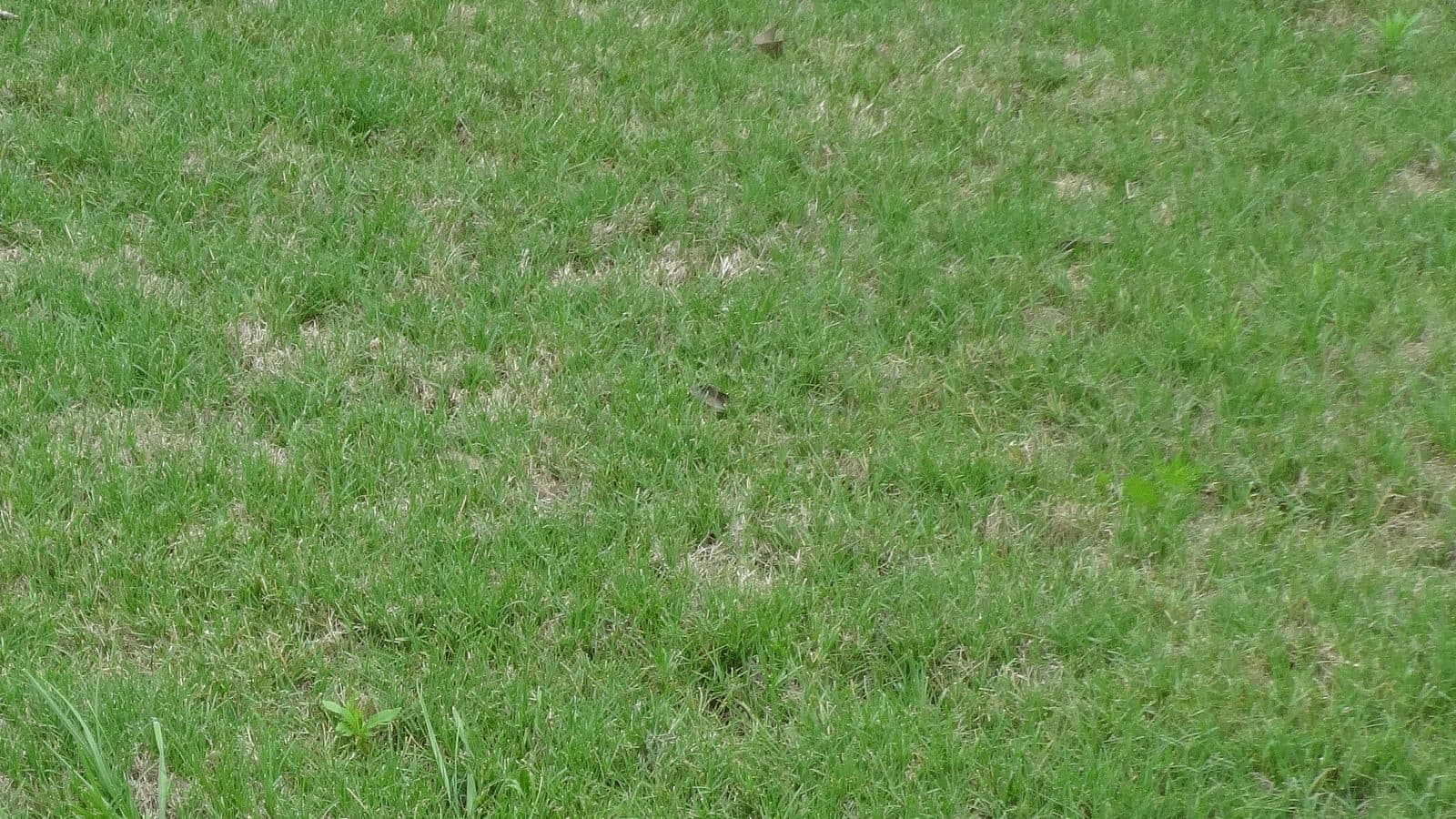
Photo: Michael Rivera, University of Georgia Research and Education Garden, licensed CC BY-SA 4.0, cropped.
Feedings timed to green-up, the right amount for your soil, and weeds handled on the same schedule. Send us the address and we will quote the 7-Step Program for your Bermuda.
